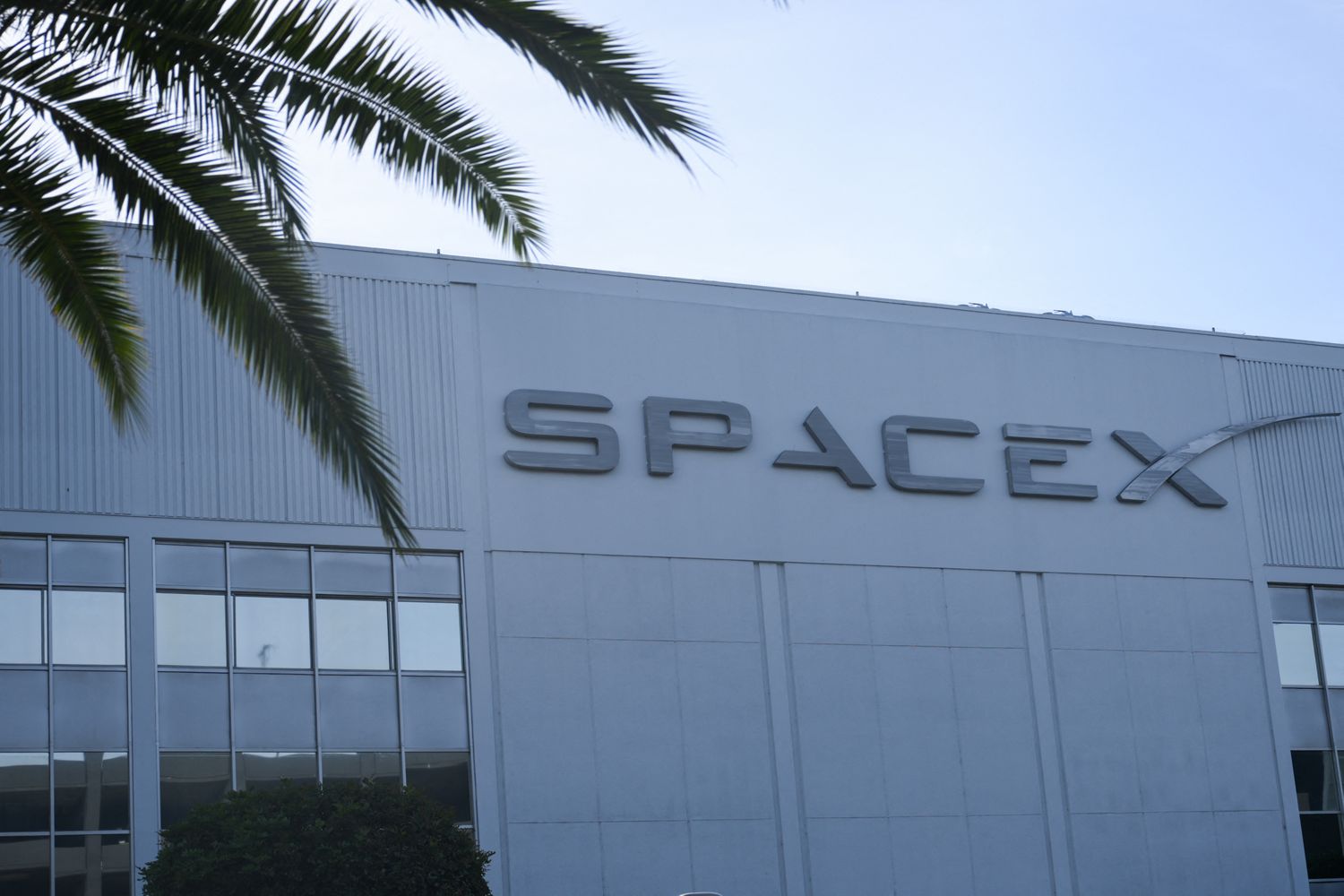
Rocket maker’s blockbuster debut values company at over $1.5 trillion as investors bet on space, AI growth
SpaceX priced its highly anticipated initial public offering at $135 per share on Thursday, raising approximately $75 billion in one of the largest stock market debuts in history and valuing the aerospace and satellite communications company at more than $1.5 trillion.
The offering marks a watershed moment for founder Elon Musk and the broader space industry, reflecting investor confidence in a company that has transformed commercial spaceflight while expanding into satellite internet, artificial intelligence, and next-generation transportation technologies.
The IPO attracted overwhelming demand from institutional and retail investors, with the offering reportedly multiple times oversubscribed. Shares are expected to begin trading on Friday under the ticker symbol “SPCX” on the Nasdaq Stock Market.
The public listing further strengthens Musk’s position as the wealthiest individual globally, with analysts estimating his net worth could exceed $1 trillion once the company’s shares begin trading, depending on market performance.
Historic Milestone for Commercial Space Industry
SpaceX’s public debut represents a landmark event for the commercial space sector, which has evolved from a niche industry dependent on government contracts into a rapidly growing market attracting billions of dollars in private investment.
Founded in 2002, SpaceX disrupted the aerospace industry through reusable rocket technology, dramatically reducing launch costs and increasing access to space. The company has since become a key contractor for government agencies and commercial customers worldwide.
Industry analysts view the IPO as a validation of the commercial viability of space infrastructure, satellite communications, and emerging technologies that could shape the next several decades.
“SpaceX has effectively created an entirely new category of infrastructure company,” said Michael Reynolds, an aerospace analyst at Horizon Capital. “Investors are not simply buying a rocket manufacturer. They are investing in a platform that spans launch services, global internet connectivity, defense applications, artificial intelligence, and potentially interplanetary transportation.”
Starlink Emerges as Major Growth Engine
A significant portion of investor enthusiasm centers on Starlink, SpaceX’s satellite internet division, which has grown into one of the world’s largest broadband networks.
The service currently provides connectivity across dozens of countries, serving consumers, businesses, airlines, maritime operators, and government agencies. Analysts estimate Starlink could generate tens of billions of dollars in annual revenue over the coming decade as demand for high-speed internet expands globally.
The satellite network has become increasingly important in remote and underserved regions where traditional telecommunications infrastructure remains limited.
“Starlink has shifted perceptions of SpaceX from a capital-intensive aerospace company to a recurring-revenue technology platform,” said Sarah Mitchell, technology strategist at Global Equity Partners. “That transition significantly improves the company’s long-term valuation profile.”
Investor Appetite Defies Valuation Concerns
Despite the company’s lofty valuation, investors appear willing to pay a premium for exposure to one of the world’s most influential technology enterprises.
At an estimated market capitalization exceeding $1.5 trillion, SpaceX joins a small group of global corporations valued above the trillion-dollar threshold. The valuation places the company among the largest publicly traded firms worldwide.
Some market observers, however, caution that the valuation reflects expectations for future growth rather than current financial performance.
“The market is assigning extraordinary value to SpaceX’s future opportunities,” said David Keller, senior market strategist at Capital Insights. “Investors believe the company can dominate multiple industries simultaneously, including launch services, satellite communications, defense technologies, artificial intelligence, and potentially space-based manufacturing.”
Nevertheless, supporters argue that traditional valuation metrics may fail to capture the long-term potential of technologies still in their early stages of commercialization.
Musk’s Influence Continues to Drive Investor Confidence
Much of SpaceX’s appeal remains closely tied to Musk himself, whose track record includes building several of the world’s most influential technology companies.
Investors frequently point to his leadership in scaling electric vehicle manufacturer Tesla, advancing reusable rocket technology through SpaceX, and supporting innovations in artificial intelligence and neurotechnology through other ventures.
The phenomenon has given rise to what some analysts describe as the “Musk Premium”—a valuation boost driven by investor confidence in the entrepreneur’s ability to execute ambitious long-term projects.
“SpaceX is not merely a company; for many investors it represents a vision of the future,” said Rebecca Larson, portfolio manager at Northstar Investments. “Whether that vision includes satellite networks, lunar missions, Mars exploration, or AI-enabled infrastructure, investors are betting that Musk will continue delivering breakthroughs.”
Government and Defense Relationships Add Stability
Unlike many high-growth technology firms, SpaceX benefits from substantial government and defense contracts that provide recurring revenue streams.
The company works extensively with NASA, the U.S. Department of Defense, and international government agencies. These partnerships have helped support development of launch systems, satellite networks, and deep-space exploration programs.
Analysts note that government relationships provide a measure of stability that can help offset risks associated with large-scale research and development initiatives.
SpaceX’s Falcon rocket family has become the dominant launch platform for many commercial and governmental missions, while its Starship program aims to support future lunar and Mars exploration efforts.
Challenges Remain Despite Strong Investor Demand
Despite investor enthusiasm, SpaceX faces significant challenges as a newly public company.
Public shareholders will likely demand greater transparency regarding financial performance, capital expenditures, and long-term profitability. Regulatory scrutiny may also increase as the company’s influence expands across multiple industries.
SpaceX continues to invest heavily in Starship development, satellite deployment, artificial intelligence initiatives, and infrastructure expansion. Such projects require substantial capital and may take years to generate meaningful returns.
Corporate governance could emerge as another area of focus, particularly given Musk’s leadership roles across several major companies.
“Public market investors generally expect greater accountability and disclosure than private investors,” said governance expert Thomas Wheeler. “Balancing long-term innovation with quarterly reporting expectations will be one of the company’s biggest tests.”
Broader Impact on IPO Market
The successful offering could reinvigorate the global IPO market, which has experienced periods of volatility amid economic uncertainty and fluctuating investor sentiment.
Investment bankers say the transaction may encourage other high-profile private technology firms to consider public listings over the coming years.
The deal also underscores continued investor appetite for companies operating at the intersection of technology, infrastructure, and artificial intelligence.
“This IPO could become a defining event for capital markets in 2026,” said Karen Phillips, head of equity capital markets at a major investment bank. “The scale of investor demand demonstrates that transformational growth stories continue to attract capital even in a challenging economic environment.”
Looking Ahead
As SpaceX prepares for its public market debut, investors will closely monitor the company’s execution across its diverse portfolio of businesses.
Success will likely depend on continued growth at Starlink, progress on Starship development, expansion of government contracts, and the company’s ability to commercialize emerging technologies.
For Musk, the IPO represents another milestone in a career defined by ambitious goals and industry disruption. For investors, it offers an opportunity to participate in a company seeking to shape the future of transportation, communications, artificial intelligence, and space exploration.
Whether SpaceX can justify its historic valuation remains uncertain. What is clear, however, is that the company has already secured a place among the most influential and closely watched businesses of the modern era.

Email: colin@satprwire.com Phone: +44 20 4732 1984
Colin has been working in the business industry for quite a sometime and he recently made the decision to become a full-time business journalist. At SAT PRWire, he also helps us take care of the business writing.